Generating your own renewable electricity is brilliant. Generating more than you need and not getting paid for the surplus? Less so.
The Smart Export Guarantee, or SEG, exists to fix that. And if you have a small-scale renewable system, there’s a good chance you’re eligible.
So what actually is the SEG?
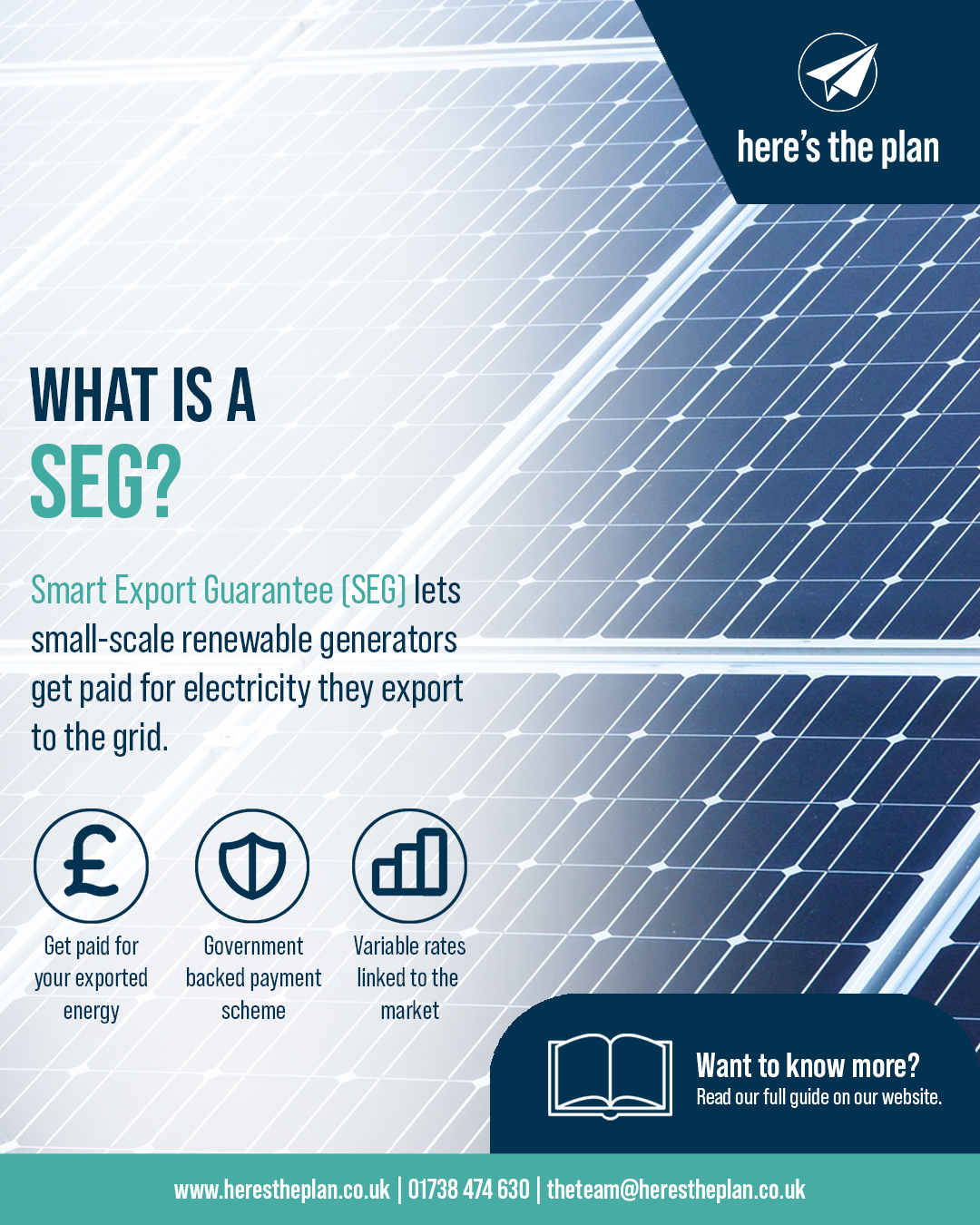
The Smart Export Guarantee (SEG) is a government-backed scheme that requires licensed electricity suppliers to pay small-scale renewable generators for the electricity they export to the grid.
It launched in January 2020 as the successor to the Feed-in Tariff (FiT) export element, and it means that anyone generating eligible renewable electricity has a guaranteed route to payment for their surplus energy.
The rate you receive varies by supplier and moves with the market, so it’s worth comparing tariffs before you commit to one.
How do you get paid?
When your system generates more than you use, the surplus flows to the grid. Your SEG supplier pays you for every unit. Simple enough in principle, though a couple of things are worth knowing.
Rates are variable. They’re linked to wholesale market prices, which means what you earn per unit can shift over time. And while the application process is fairly straightforward, it can take a while to complete, so factor in a wait before your first payment lands.
Are you eligible?
To qualify for a SEG tariff, you’ll generally need a small-scale low-carbon generation system such as solar PV, wind, hydro, anaerobic digestion, or micro combined heat and power (micro CHP), with a capacity of 5MW or below (50kW or below for micro CHP). You’ll also need a smart meter capable of providing half-hourly export readings, and your system will need to have been installed by an MCS-certified installer.
Specific criteria can vary slightly between suppliers, so it’s worth checking directly with whoever you’re applying to.
Is the SEG a good option?
For smaller installations, absolutely. It’s government-backed, accessible, and gets you a payment route without the need for a commercial negotiation. If your export volumes are modest and you want to keep things simple, the SEG does the job.
That said, variable rates mean your income isn’t fixed, and if your system is on the larger side with significant export volumes, you may find there’s a better deal available elsewhere.
Your questions, answered
What does SEG stand for? Smart Export Guarantee. It’s the government-backed scheme that ensures licensed electricity suppliers offer payment to small-scale renewable generators for electricity exported to the grid.
How much does the SEG pay? Rates vary by supplier and fluctuate with the market. It pays to compare, and to revisit your tariff periodically to make sure you’re still on the best rate available.
How long does the application take? It varies, but the process can take longer than you might expect. Build in some lead time before you anticipate your first payment.
Can solar panel owners apply for the SEG? Yes, solar PV is one of the most common eligible technologies, alongside wind, hydro, anaerobic digestion, and micro CHP.
What happened to the Feed-in Tariff (FiT)? The FiT closed to new applicants in 2019. The SEG replaced the export element for new generators. If you’re already on a FiT, your existing payments continue as normal.
Not sure if the SEG is the right fit?
It’s a great option for many smaller generators. But if your system is on the larger side and you’re exporting significant volumes, you might get more value from an Export PPA instead.
Find out more about what an Export PPA is here, or compare Export PPAs vs SEGs to see which makes more sense for your setup here.
Either way, we’re here to help you work it out. Drop us a message and we’ll point you in the right direction.
📧 theteam@herestheplan.co.uk
📞 01738 474 630








2 thoughts on “What is a Smart Export Guarantee (SEG)?”
Comments are closed.