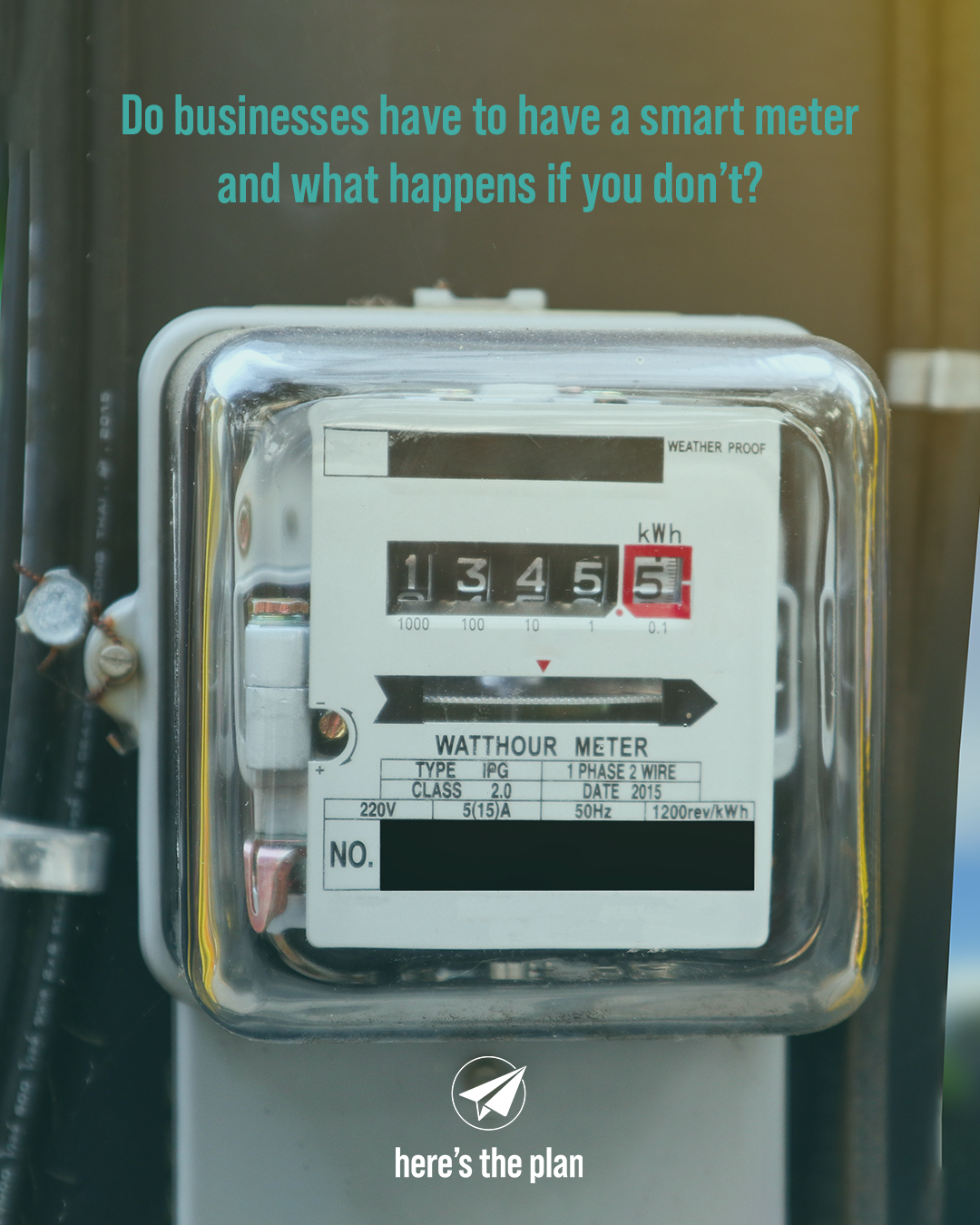
As the UK energy market undergoes significant change, many businesses are asking whether they can be forced to install a smart meter. The answer is not always straightforward, particularly with the introduction of Market-wide Half-Hourly Settlement (MHHS).
Most large businesses already have Half hourly smart metering. For smaller businesses, smart meters are not currently mandatory by law. However, the energy industry is moving towards a system where electricity usage is calculated and settled using half-hourly consumption data rather than estimates. This industry-wide reform, known as Market-wide Half-Hourly Settlement (MHHS), is being implemented by Ofgem to create a smarter, more efficient and lower-carbon electricity system.
Under MHHS, suppliers will increasingly rely on actual energy consumption data collected every 30 minutes. The programme aims to improve billing accuracy, provide greater visibility of energy usage and support flexible tariffs as well as helping businesses identify opportunities to reduce costs by shifting consumption away from peak periods.
While MHHS itself does not automatically require every business to install a smart meter, access to half-hourly consumption data is central to the new settlement process. Smart meters and Advanced Meter Reading (AMR) meters are the primary technologies used to provide this data. Businesses without suitable metering may find their options limited as suppliers continue their transition to the MHHS framework.
There is also a potential cost consideration. Some suppliers may apply additional data collection, manual meter reading or metering service charges where a business chooses not to install a smart or half-hourly capable meter. Depending on the supplier and metering arrangement, these charges can be up to £30 per month, making the cost of retaining older meter technology increasingly difficult to justify.
The MHHS migration programme is already underway across the industry, with suppliers moving customers onto the new settlement arrangements through to 2027. For many businesses, the transition will happen automatically with little or no disruption. In some cases, suppliers may need to upgrade or replace existing metering equipment to ensure compliance with industry requirements and access to accurate half-hourly data.
The key takeaway is that while a smart meter may not be legally mandatory for every business today, the move to Market-wide Half-Hourly Settlement means that half-hourly metering is rapidly becoming the industry standard. Businesses that embrace the change can benefit from more accurate billing, improved visibility of energy usage, potential cost savings and access to future energy products and tariffs, while those that choose not to may face additional data collection and administration costs.
Got a query? That’s exactly what we’re here for.
theteam@herestheplan.co.uk
01738 474 630
Sources
• Ofgem, Market-wide Half-Hourly Settlement (MHHS): https://www.ofgem.gov.uk/energy-policy-and-regulation/policy-and-regulatory-programmes/electricity-market-wide-half-hourly-settlement
• Elexon, Market-wide Half-Hourly Settlement: https://www.elexon.co.uk/what-we-do/market-wide-half-hourly-settlement/